Advertisements
Technologies that make smart cities possible It is no longer a futuristic expression or a concept reserved for distant government plans.
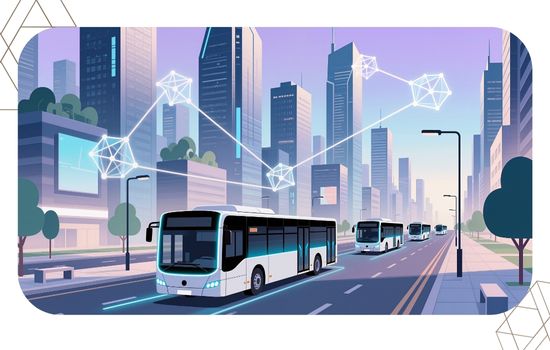
From the outset, it's important to clarify: smart cities exist because today digital infrastructures, data management, and evidence-based public decisions converge.
Understanding these technologies helps us understand how urban life will change in the coming years and why that change is already underway.
Article summary:
The following section analyzes which technologies underpin the smart city model, how they interact with each other, what concrete benefits they bring to citizens, what the real challenges are, and why their correct implementation defines urban success by 2025. All with a critical, human, and up-to-date approach.
More than gadgets: the technological foundation of smart cities
Talking about smart cities doesn't just mean talking about sensors or digital screens.
Advertisements
The concept is based on integrated technological ecosystems that allow cities to observe, analyze, and act more efficiently.
Connectivity, data, automation, and digital governance work together.
In that sense, Technologies that make smart cities possible It refers to a set of tools that transform urban management.
They don't promise perfect cities, but they do promise more functional, sustainable, and people-centered environments.
Internet of Things: the city that senses and responds
The Internet of Things (IoT) has become one of the cornerstones of the smart model.
Sensors distributed throughout streets, buildings, and public networks collect real-time information on traffic, energy consumption, air quality, and noise levels.
The difference in 2025 lies in the strategic use of that information. It's no longer about accumulating data, but about turning it into useful decisions.
When a city can anticipate traffic congestion or detect a water leak before it becomes critical, technology ceases to be invisible and begins to be felt in daily life.
Connectivity and networks: the silent infrastructure
Without robust connectivity, there are no smart cities. Fiber optic networks, 5G, and, in some cases, LPWAN technologies enable millions of devices to communicate securely and efficiently.
According to data from International Telecommunication Union (ITU), in 2024 more than 67% of the world's population already had internet access, a key figure to understand why digital urban solutions are expanding so rapidly.
Connectivity is becoming established as an essential service, on par with water or electricity.
Here, Technologies that make smart cities possible It depends both on large investments and on planning that prioritizes equitable coverage.
Big Data and urban analytics: making decisions based on evidence
Cities generate enormous volumes of information every day.
Urban Big Data allows for the analysis of mobility, consumption, and social behavior patterns that were previously invisible.
More importantly, advanced analytics transforms that data into evidence-based public policies.
Adjusting transport routes, planning green areas, or redistributing emergency services becomes more accurate when decisions are based on real and up-to-date information.
Here, human judgment is not replaced; it is strengthened. Technology amplifies the capacity to understand urban complexity.
Artificial intelligence applied to public management
Artificial intelligence (AI) is becoming increasingly integrated into urban administration.
Algorithms optimize traffic lights, predict energy demand, or detect anomalous patterns in utility networks.
Example 1 (original): A city with high climate variability began using AI models to anticipate peak electricity consumption during heat waves.
Thanks to these predictions, the energy system was able to redistribute loads and avoid blackouts, without the need for new generating plants.
AI, when properly applied, does not replace political decisions; it makes them more informed.
Digital government platforms and open data
Another key piece within Technologies that make smart cities possible It is the digitization of public services.
Online processing platforms, open data portals, and digital channels for citizen participation strengthen the relationship between government and society.
Transparency becomes a strategic advantage.
When data is available and understandable, institutional trust increases and collaboration between the public, private, and academic sectors improves.
Cybersecurity: a requirement, not an add-on
As cities become digitized, protecting information becomes critical.
Cybersecurity is no longer limited to protecting servers; it also safeguards essential services such as transportation, water, and energy.
Ignoring this aspect could put millions of people at risk.
For this reason, the most advanced smart cities integrate digital security from the design phase, not as a later correction.
Smart energy and urban sustainability
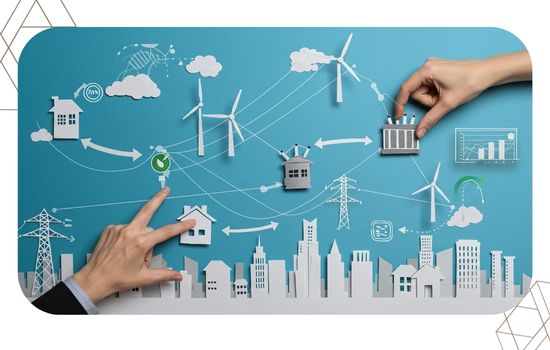
Smart grids allow for the integration of renewable energy, demand management, and the reduction of losses.
Smart meters provide accurate information to both operators and users, encouraging more conscious consumption.
Here, technology acts as an ally of sustainability.
It's not just about reducing emissions, but about building resilient systems in the face of climate and energy crises.
Analogy to understand the urban technological ecosystem
A smart city functions as an urban nervous system.
The senses would be the sensors, the spinal cord the networks, and the brain the data centers. If any part fails, the response slows down.
When everything is connected and coordinated, the city reacts more quickly and efficiently to any stimulus.
Visible benefits for citizens
The benefits of these technologies are not limited to technical reports.
They translate into smoother everyday experiences: less wasted time, more reliable services, and safer urban environments.
The following table summarizes key technologies and their direct impact:
| Urban technology | Impact on daily life |
|---|---|
| IoT and sensors | Rapid response to urban problems |
| 5G/Fiber Connectivity | More stable digital services |
| Big Data | More precise public policies |
| Applied AI | Optimization of resources and services |
| Digital government | Streamlined procedures and greater transparency |
This combination explains why Technologies that make smart cities possible It has become a global strategic axis.
Read more: 3D printing: how it's revolutionizing the industry
Digital inclusion: the challenge that defines urban intelligence
Not all technology is automatically inclusive. The digital divide persists and could widen if not consciously addressed.
Access to connectivity, digital literacy, and design focused on diverse users are essential.
Example 2 (original): A city that migrated essential services to digital platforms detected low adoption in peripheral areas.
By complementing the technology with community digital support centers, it managed to increase usage without excluding anyone.
True urban intelligence is also measured by its ability to integrate the entire population.
Current challenges and real limitations
Despite the progress, significant challenges remain: high initial costs, interoperability between systems, dependence on technology providers, and the need for specialized talent.
Furthermore, copying models without local adaptation often leads to frustration. Each city has its own unique dynamics.
Therefore, Technologies that make smart cities possible It must be adapted to the social, economic, and cultural context of each territory.
Why do these technologies define the urban future?
Cities concentrate population, consumption, and opportunities.
Managing them with traditional methods is no longer sufficient in the face of urban growth and environmental pressure.
Integrating technology with a strategic vision becomes a structural necessity.
The question is no longer whether cities should adopt these solutions, but how to do so in an ethical, sustainable, and people-centered way.
What good is a hyper-connected city if it doesn't improve the daily lives of its inhabitants?
Conclusion: Technology with an urban purpose
Technologies that make smart cities possible They do not represent a passing fad, but a logical evolution of urban management.
When applied with sound judgment, transparency, and a human-centered approach, these tools allow for the construction of more efficient, resilient, and livable cities.
The future of urban life depends not on how many devices are installed, but on how they are used to solve real problems and improve daily life.
That's the difference between a merely digital city and a truly smart one.
Read more: Smart cities: the future of urban life
Frequently Asked Questions
Do smart cities depend solely on advanced technology?
No. Technology is an enabler. Urban planning, governance, and citizen participation are equally important.
Are these technologies viable in medium-sized cities?
Yes. Many solutions can be adapted to different scales and budgets when there is a clear strategy.
Are there risks to privacy?
Yes. For that reason, legal frameworks, transparency, and cybersecurity by design are required.
Do citizens perceive real benefits?
When implemented correctly, the benefits are reflected in more agile services, less wasted resources, and a better quality of life.
This analysis demonstrates that Technologies that make smart cities possible It is not just a technical concept, but a concrete basis for redefining urban life in 2025 with vision, responsibility and a human approach.