Advertisements
Since the beginning of the digital age, imagining homes where machines perform everyday tasks has been both a fantasy and a technological promise.
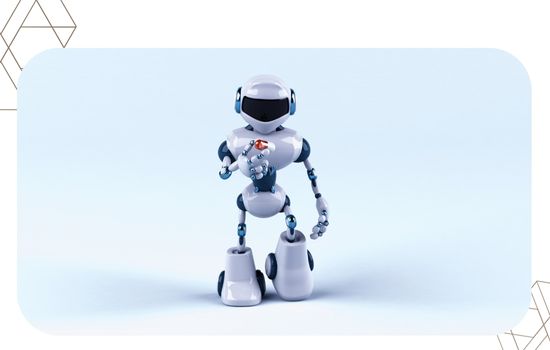
In this context, Domestic robots: myths and realities becomes an essential keyword to clear up doubts:
Does what you see in movies and advertisements correspond to what you can have in your home today?
Advertisements
- The current state of the domestic robot market and its recent evolution.
- Common myths circulating about their capacity, costs, social impact and technical limits.
- Contrasting realities: what they can really do, what they entail, and the challenges.
- Practical examples of real-life use, interviews, and verifiable data.
- Thoughtful conclusion on what adopting domestic robots in Mexico will entail, along with recommendations.
- Frequently asked questions, with evidence-based answers.
The market today — figures that speak
Before believing any myth, it's worth looking at the numbers.
The global market for domestic robots reached an estimated value of USD 8.55 billion in 2024, and is expected to grow to about USD 22.46 billion in 2029, with a compound annual growth rate (CAGR) of approximately 18.81 %.
In Latin America, although with lower penetration compared to North America or Asia, there are companies like Osoji Robotics that are trying to close the gap with more affordable specialized robots.
This growth reflects not only demand, but also investment, innovation in AI (artificial intelligence), sensors, autonomous navigation, and integration with smart homes.
But as we shall see, it also reveals where the promise has not yet been fulfilled.
Common myths about domestic robots
Here I've compiled some of the most widespread myths, which are worth reviewing to distinguish what is unknown from what has been verified.
Myth 1: “Robots will do everything at home”
It is thought that a single domestic robot will clean, cook, iron, take care of children or the elderly, and perform all household chores.
It is a very common vision in science fiction.
But in today's reality, specialized domestic robots (vacuum cleaners, window cleaners, garden robots) dominate the market, not multifunctional humanoids.
A recent study from the University of Washington showed that most users prefer specialized robots over versatile humanoids.
Myth 2: They are too expensive for the average user
It is true that high-end domestic robots—especially humanoid prototypes—are expensive.
But prices have been dropping as specialized devices become more popular.
Osoji, for example, seeks to manufacture domestic robots at prices 30-50 % lower than market leaders.
Myth 3: They will completely replace human labor
There are those who imagine a future without the need for domestic employees.
However, what current data suggests is that robots could alleviate physical burdens, repetitive or heavy tasks, but many tasks require judgment, empathy, and human care.
They do not replace the human in the social or emotional aspects.
Studies on humanoids and home assistants suggest that public acceptance depends on evidence of safety, privacy, and appropriate design.
Myth 4: They are infallible and practically automatic
There's a tendency to think that a home robot will always work perfectly: it won't get stuck, it won't crash, it will clean without supervision.
The reality is that many robots face technical failures, navigation problems, limitations in climbing steps, recognizing complex objects, or costly maintenance.
An analysis of user reviews identified that technical issues (task completion, robustness) are the ones that most impact the experience.
Verified Realities — What Robots Can and Can't Do
Now, what promises do domestic robots deliver? These are the proven, recent realities and their limitations.
Actual capacity
- Robot vacuums and mops have become quite sophisticated: home mapping, obstacle detection, automatic scheduling.
- Robotic window cleaners and lawnmowers now operate without prolonged intervention, especially in specialized models.
- Companion robots or basic assistants are beginning to be integrated: some can transmit security images, make video calls, and carry light objects. A recent example is Amazon's "Astro," designed for video calls, light surveillance, carrying small objects, and facial recognition.
Compelling technical limitations
- Humanoids have not yet developed strength and dexterity in all areas: lifting heavy loads, arms overhead, and delicately manipulating complex objects is still difficult.
- Battery life, maintenance, software glitches, and adapting to diverse home environments (rough floors, misplaced objects) remain obvious challenges.
- Physical security and data protection aren't always uniform, raising concerns among potential users. In recent surveys, many indicated they would accept domestic robots only if they meet adequate safety, privacy, and insurance standards.
Social and economic impact
- In Mexico and other countries, domestic chores fall disproportionately on women. A fact from the National Time Use Survey (ENUT 2019) indicates that women dedicate on average 34 hours per week to housework, compared to 12 hours for men. Domestic robots could free up some of that time, allowing for other productive or leisure activities.
- However, adoption is uneven: initial cost, electrical infrastructure, connectivity, household culture, and acceptance of change all play a role. Not all households have access to or are willing to invest in these devices.
Read more: Modern Robotics: What Robots Can Do in 2025
Two practical examples
To better illustrate what I mean, here are two real-life examples:
Example A:
In Santiago, Chile, Osoji Robotics developed a robotic window cleaner that was well received in Mexico.
Users purchase it not only for home cleaning, but also for providing off-site cleaning services for difficult-to-use glass.
This shows that the value of a home robot can go beyond personal use.
Example B:
The “Neo” robot, from manufacturer 1X, is a humanoid in testing that already performs tasks such as cleaning surfaces, delivering water bottles, and loading washing machines, but with limitations: it cannot raise its arms above its head, it sometimes spills objects, and its operations require supervision.
Myths and realities — comparison table
| Myth | What really happens | Implications for those considering purchasing domestic robots |
|---|---|---|
| One robot does it all | Only specialized robots work well today; humanoids have not yet mastered all tasks. | It is best to purchase based on specific needs: cleaning, surveillance, assistance, etc. |
| Always high price sign | Some prices are still high, but there are affordable options in simpler lines. | Analyze cost-benefit: invest in what will be used most, considering maintenance and consumption. |
| Replacing the domestic worker | They complement repetitive tasks, but they do not yet replace the human aspect of emotional care, judgment, or supervision. | It can transform job roles: less physical, more supervision, maintenance, programming. |
| They work perfectly without supervision | Technical failures, navigation or detection errors, actual design limitations. | It is important to monitor, maintain, and choose brands with good customer service. |
Outlook for Mexico: What should a user consider?
If you live in Mexico, some practical considerations can help you make sure what you buy really works for you.
- Infrastructure: Stable electrical connectivity, good internet if the robot connects to the cloud or needs frequent updates.
- Technical service and spare parts: that there is a local warranty, customer service, ability to repair or replace parts.
- Regulations and privacyReview privacy policies, camera permissions, and where data is stored. Choose robots with frequent security updates.
- Hidden costs: replacement battery, filters, maintenance, energy consumption.
- Actual use vs. advertising: be clear about what tasks you really want to delegate, how many hours you will use it, and what expectations are realistic.
Conclusion
The topic of Domestic robots: myths and realities It shows that we live in a time of transformation: there are real advances, there are technological promises, but there are also firm limits.
Believing that a robot will do absolutely everything in your home today is a fantasy; ignoring its already mature capabilities is a missed opportunity.
Using them wisely can free up time, improve quality of life, and connect with your smart home; doing so without information can lead to frustration.
Before deciding, the most responsible thing to do is to evaluate your needs, research models, read real reviews, and see how well they work in conditions similar to yours.
If you do that, the robot will cease to be a myth and become a useful reality.
Read more: Artificial Intelligence in 2025: How It Is Changing Society
Frequently asked questions
Can a domestic robot become obsolete in just a few years?
Yes, that can happen if technology advances significantly, but it's mitigated if you purchase upgradeable equipment, reputable brands, and support. Many home robots receive post-sale software upgrades.
Do robots pose a security or privacy risk?
It depends on how they are designed.
Domestic robots with cameras, microphones, or cloud access can pose risks if they don't have encryption, a clear data policy, user permissions, and security updates.
It is a critical aspect that many buyers overlook.
Can domestic robots adapt to Mexican homes with a variety of floors, objects, and climates?
Yes, in many cases, as long as the design includes efficient sensors, robust algorithms, and terrain adaptation.
But performance can vary greatly between a modern home with clean floors and one with clutter, thick carpets, pets, dust, and moisture.
Is it worth the investment for an average family?
Yes, if you identify a specific need that the home robot can solve (such as constant cleaning, care for the elderly, surveillance, etc.).
If you buy it just for fashion, without practical use, it may not be justified.