Advertisements
Modern Robotics: What Robots Can Do in 2025 invites you to explore a current and realistic panorama of what intelligent machines can already achieve.
This article will show you:
1) the most relevant technical advances;
2) practical applications in different sectors;
3) ethical, social and security challenges;
Advertisements
4) expectations for the coming years.
By the end, you'll understand how these innovations are changing everyday life, the economy, and our relationships with technology.

Recent technological advances
By 2025, robots will no longer simply follow lines or repeat movements, but will integrate artificial intelligence models that allow them to adapt, reason, and collaborate.
A key development has been the creation of generalist models such as Gemini Robotics On-Device, associated with Google DeepMind, which allows robots to operate with low local delay, without relying as much on the cloud, which improves safety and autonomy.
Another line of progress is Vision-Language-Action Models, which enable robots to understand complex contexts and translate this understanding into coordinated actions.
An example is Helix, introduced in 2025.
Furthermore, soft robotics has made considerable progress, enabling safer and more sensitive interactions, useful in healthcare or close manipulation of the human body.
Sectors that are already transforming
Industry and manufacturing
Industrial robotics continues to grow at a rapid pace.
According to the report World Robotics 2025, in 2024 were installed globally 542,076 industrial robots, a figure that more than doubles that of a decade ago.
Asia accounts for approximately 74 % of new installations, Europe for around 16 %, and America for around 9 %.
Collaborative robots (cobots) have become essential in assembly and logistics plants, working alongside humans on repetitive, dangerous, or highly precise tasks.
They are also used for predictive maintenance, which reduces downtime and operating costs.
Health and care
Surgical robots are now capable of assisting in operations with greater accuracy and less invasiveness.
In nursing homes, assistive robots are used to move patients, administer medications, and monitor vital signs.
These systems improve the quality of life for elderly people or those with limited mobility.
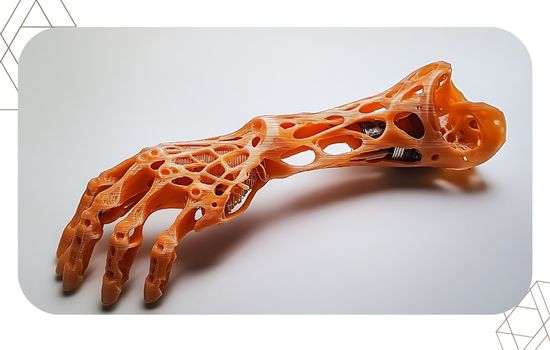
A novel device: robotic exoskeletons that allow physical rehabilitation or even restore partial mobility to those who have lost it.
Logistics, deliveries and services
Autonomous mobile robots (AMRs) are revolutionizing warehouses, distribution centers, and last-mile delivery routes.
They use sensors, computer vision, and machine learning to avoid obstacles, optimize routes, and operate in dynamic environments.
Business models such as Robotics as a Service (RaaS) They allow small and medium-sized companies to access robots without making large initial investments, by renting them or paying for their use.
Agriculture, exploration and environment
Agricultural robots monitor crops with drones or sensors, identify pests, apply treatments only to necessary areas (reducing chemical use), and harvest with precision.
In marine exploration, autonomous underwater vehicles survey reefs, study ecosystems, or map the seafloor.
Specific skills of robots in 2025
To make it clear what robots can do today, here are two original examples:
Smart Hospital: An operating room assistant robot that monitors vital signs in real time, adjusts lighting, prepares tools, and cooperates with the team to anticipate needs, thanks to multiple sensors and natural language processing.
It does not replace the surgeon, but it improves efficiency and reduces errors.
Digital Farmer: A robot implemented with advanced vision analyzes the condition of soil and plants, detects pests or diseases early on, applies only targeted pesticides, and automatically harvests fruits gently, minimizing damage to the fruit.
All this under changing environmental conditions, such as variations in light or humidity.
Most revealing statistics
- According to World Robotics 2025 Report, 542,076 industrial robots will be installed in factories by 2024, more than double the number installed ten years ago.
- Market estimates indicate that global robotics technology was worth approximately USD 94.56 billion in 2024, and is expected to reach close to USD 375.95 billion by 2034, with a compound annual growth rate (CAGR) of 46.1 %.
Putting these numbers into perspective: if you had 10 robots today, you could have more than 40 in five years, maintaining that rate in dynamic sectors, not counting improvements in the capacity of each unit.
Read more: Artificial Intelligence in 2025: How It Is Changing Society
Challenges and barriers
Although the progress is impressive, not everything is resolved:
- Physical securityHighly autonomous robots interact with humans, requiring strict standards for safety, fault detection, and emergency response. A recent model (Foundation Model-enabled Robots) raises concerns about physical risks if not properly controlled.
- Real vs. simulated dataMany capabilities are trained in simulations; transferring them to the real world (distributed, chaotic, unpredictable) remains complex.
- Regulation and ethics: Privacy, liability for errors, job displacement, and increasing autonomy require legal and ethical frameworks that are not yet uniform.
- Uneven cost and adoption: Although RaaS and cobots reduce barriers, many companies in developing countries face difficulties with access, infrastructure, training, and maintenance.
Read more: Curiosities about the origin of emojis
Immediate future trends
Based on what happens until 2025, it is observed that:
- Generalist robot models are becoming more established, with the same “mind” (AI model) serving several different physical bodies.
- Improvements in human-machine interaction, both physical and communicative: nonverbal recognition, more realistic facial expressions, responsive environments.
- Edge computing and less reliance on the cloud will become the norm to reduce latency and vulnerabilities.
- Personal and companion robots (for elderly care, education, and domestic spaces) will grow in acceptance as costs fall and usability improves.
- Sustainability: resource-optimizing agricultural robots, energy-efficient robots, biodegradable materials, waste reduction.
Conclusion
The Modern robotics: what robots can do in 2025 It is not a question of science fiction, but of already visible facts.
Collaborative robots in factories, medical assistants, AMRs, exoskeletons, agricultural robots, and general-purpose AI models are transforming entire industries.
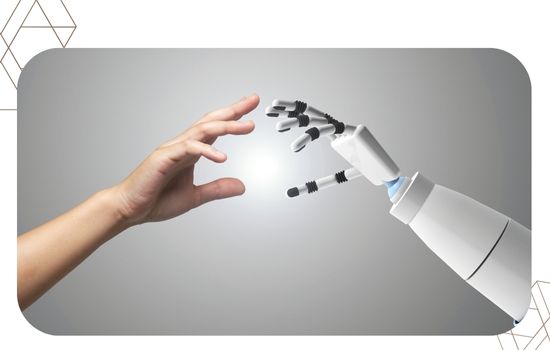
Although technical, ethical, and social obstacles remain, the trend is toward an ever closer integration between humans and robots.
If you stay curious—and look for ways these advancements can impact your life or business—you now have the full picture.
Soon, you'll see robots not just as tools, but as useful companions in everyday tasks.
Read more: History of video games: from 8-bit to virtual reality
Frequently Asked Questions
Will robots replace human jobs?
Not necessarily. In many cases, they complement each other, taking over repetitive, dangerous, or precision tasks, freeing up people for creative, supervisory, or innovative work.
Of course, some roles can change or disappear, which requires adaptation and professional retraining.
Are autonomous robots safe?
When designed with safety standards, redundant sensors, and risk control before, during, and after deployment, they can be very safe.
However, autonomy is growing rapidly, and some regulations have yet to keep pace, so there is a risk if they are not properly monitored.
How much does it cost to adopt advanced robotics?
It depends a lot on the type (industrial, healthcare, domestic), the degree of autonomy, and the available business models (purchase vs. rental or service).
Cobots and RaaS models reduce initial barriers, but maintenance, integration, and infrastructure add significant costs.
Where else will we see robots next?
In homes (care, cleaning, surveillance), education (personalized teaching, support for STEM learning), smart cities (autonomous transportation, urban maintenance, environmental management), mental health, and companionship for older adults.
How to prepare for living with robots?
Be critical of information sources, learn about emerging technologies, foster ethical use, acquire digital and human-machine collaboration skills, and participate in public policy and regulations.