Advertisements
Renewable energy and technology: towards a greener future It is not just an editorial trend; it is the axis that today defines how energy is produced, distributed and consumed in much of the world.
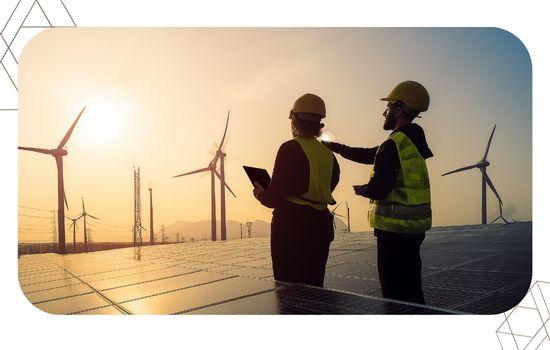
The energy transition is already underway and combines technological innovation, economic decisions and an increasingly visible environmental responsibility.
Summary of what you will find in this article:
- How technology is accelerating the adoption of clean energy
- The role of digitization, artificial intelligence, and storage
- Real impacts on the economy, employment and daily life
- A key statistic and a clear analogy to understand the change
- Current challenges and frequently asked questions about the future of energy
Are we ready to rely on smarter, more decentralized energy systems?
The convergence between clean energy and technological innovation
Talk about Renewable energy and technology: towards a greener future It implies recognizing that the advancement of one depends directly on the progress of the other.
Advertisements
Solar, wind, hydroelectric, and geothermal energy have existed for decades, but their mass adoption was only possible when technology reduced costs, improved efficiency, and allowed for more precise management.
In recent years, solar panels have increased their performance while decreasing their price thanks to improvements in materials, sensors, and manufacturing processes.
Something similar happened with wind turbines, which today capture more energy with less visual and environmental impact.
Technology does not act as a complement; it functions as the silent engine that makes viable projects that were previously unfeasible from a technical or financial point of view.
Energy digitization: smart grids and real-time control
One of the most profound changes occurs within the electrical grids.
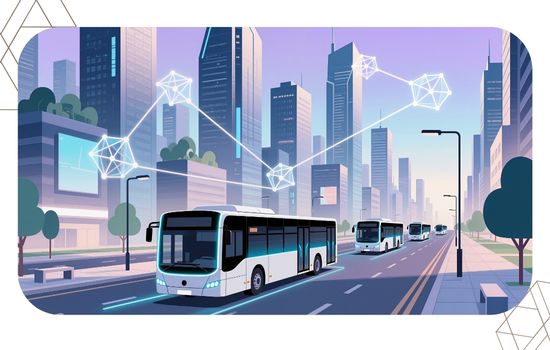
The calls smart grids They use advanced software, sensors, and data analysis to balance supply and demand in real time.
Unlike traditional networks, these infrastructures not only distribute energy, they also learn from consumption patterns.
Thanks to digitization, losses are reduced, failures are prevented, and variable sources such as the sun and wind are integrated without compromising the stability of the system.
Energy ceases to be a rigid flow and becomes a dynamic, adaptable, and more resilient system.
Here, Renewable energy and technology: towards a greener future This translates into control, efficiency and transparency, both for large operators and end users.
Artificial intelligence applied to renewable energy
Artificial intelligence (AI) is positioned as one of the most influential tools in the sector.
Machine learning algorithms analyze weather data, historical consumption, and equipment status to anticipate production and optimize resources.
A concrete example can be seen in wind farms where AI adjusts the orientation of the turbines according to micro-variations in the wind, increasing generation without the need for new installations.
This continuous optimization reduces operating costs and extends the useful life of the equipment.
Far from being a futuristic promise, AI is already part of the daily operation of multiple energy projects around the world.
Energy storage: the missing link
For years, one of the main challenges of renewable energy was intermittency.
Storage technology, especially lithium-ion batteries and hybrid solutions, changed that landscape.
Storage allows surplus energy produced during peak generation hours to be stored and released when demand increases.
This stabilizes the supply and reduces dependence on backup fossil fuel sources.
To understand its importance, a simple analogy suffices: renewable energy without storage functions like a market without refrigeration; it produces abundance at certain times, but wastes value if it cannot be stored for later.
Economic impact and technological job creation
The relationship between Renewable energy and technology: towards a greener future It also generates tangible economic effects.
The sector not only drives decarbonization, but also creates skilled jobs in engineering, data analysis, advanced maintenance and software development.
According to the International Energy Agency (IEA), approximately 2023 was added 500 gigawatts of new renewable capacity worldwide, marking the highest annual growth recorded to date.
This data reflects sustained investment and a growing demand for specialized talent.
The energy transition, far from slowing down the economy, is redefining entire production chains and opening up opportunities in regions previously dependent on traditional energy models.
Technology and decentralization of energy consumption
Technological innovation means that energy generation is no longer exclusive to large plants.
Today, homes, businesses, and communities produce some of their own electricity through solar systems, microturbines, or hybrid solutions.
A clear first example can be seen in urban areas where buildings equipped with solar panels and energy management systems reduce costs and sell surpluses to the grid.
This decentralization strengthens energy security and empowers the consumer.
The centralized model is giving way to a more distributed, flexible and participatory one, aligned with a long-term sustainable vision.
Real sustainability: beyond environmental discourse
The advance towards Renewable energy and technology: towards a greener future It is not based solely on ecological arguments.
Reducing emissions, using resources efficiently, and less dependence on imported fuels offer strategic benefits to countries and companies.
Furthermore, the technology allows for more precise measurement of impacts.
Sensors, monitoring platforms, and digital audits ensure that projects meet verifiable environmental and social standards, strengthening public trust.
Sustainability ceases to be an abstract concept and becomes a measurable, auditable and improvable process.
Current challenges in technological integration
Despite the progress, significant challenges remain. The existing infrastructure, designed for centralized systems, requires modernization.
Cybersecurity concerns are also emerging, as smarter networks need protection against digital attacks.
Training skilled professionals and updating regulatory frameworks remain pending tasks in many countries.
However, these challenges do not hinder progress; they force it to be more rigorous and strategic.
The balance between innovation, security and accessibility defines the next stage of the energy sector.
The role of the user in the new energy model
Technology alone does not transform the sector. Informed user participation is key.
Monitoring applications, dynamic pricing, and energy efficiency systems enable more informed decisions about consumption and savings.
A second example appears in companies that use digital platforms to adjust their energy demand according to prices and renewable availability, reducing operating costs without sacrificing productivity.
The consumer goes from being passive to becoming an active actor within the energy ecosystem.
Table: Key technologies and their impact on renewable energy
| Technology | Main function | Direct impact |
|---|---|---|
| Smart grids | Efficient management and distribution | Less energy loss |
| Artificial intelligence | Prediction and optimization | Higher performance |
| Storage systems | Stability and continuity of supply | Intermittency reduction |
| Sensors and digital monitoring | Environmental and operational control | Transparency and security |
Read more: Cybersecurity in 2025: Main digital threats
Conclusion: a green future built with innovation
Renewable energy and technology: towards a greener future It does not represent a distant promise, but a constantly evolving reality.
The combination of innovation, data, and environmental commitment is redefining how energy is produced and consumed.
The path is not free of obstacles, but the direction is clear.
Smarter, cleaner, and more participatory systems offer a unique opportunity to balance economic development and environmental responsibility.
Those who understand this transformation today will have a competitive and social advantage tomorrow.
Read more: Blockchain beyond cryptocurrencies: real-world applications
Frequently Asked Questions
Can renewable energy meet all current demand?
With the right technology, storage, and smart grids, more and more countries are gradually moving closer to that goal.
Does the energy transition make electricity more expensive?
In many cases, technological integration reduces costs in the medium and long term thanks to efficiency and less dependence on fossil fuels.
What role does technology play in the stability of the electrical system?
It allows for predicting failures, balancing the network, and managing variable sources without compromising supply.
Are renewable energies reliable in the long term?
With technological maintenance and proper planning, they offer high reliability and a lower environmental impact.
How can an ordinary person participate in this change?
Adopting efficiency solutions, distributed generation, and digital tools to better manage your energy consumption.