Advertisements
Have you ever wondered what the difference is between apps and programs?
These words are frequently used in our daily lives, but many people still don't know exactly what each one means.
In this article, we'll clear up this question in a simple and straightforward way. Get ready to learn and share this information with your friends!
The Beginning of Everything
To understand the difference between applications and programs, we need to go back in time a little.
The history of computer programs began around the 1940s, with the creation of the first digital computers.
Advertisements
Read also:
At that time, programs were instructions written in machine language, which computers used to perform specific tasks.
Apps, as we know them today, began to gain popularity with the emergence of smartphones in the late 2000s.
With the launch of the iPhone in 2007 and Android in 2008, app stores (App Store and Google Play) revolutionized the way we use our mobile devices.
Since then, apps have become an essential part of our daily lives.
What are the Programs?
A program is a set of instructions that a computer follows to perform a specific task.
These programs can be operating systems, such as Windows or macOS, or software that performs specific functions, such as Microsoft Word or Photoshop.
The programs are generally more complex and robust, designed to run on desktop or laptop computers.
They may require more detailed installation and configuration and are capable of performing more intensive tasks in terms of data processing and storage.
And the apps?
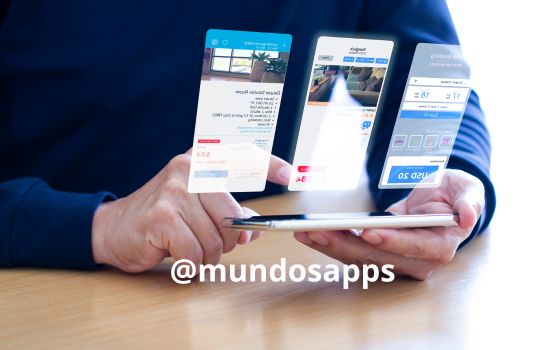
Applications, also known as apps, are specific programs created to perform a particular function on mobile devices, such as smartphones and tablets.
They are designed to be easy to use and accessible, with user-friendly and intuitive interfaces.
Applications are generally lighter and focus on simple tasks or solving specific problems.
For example, WhatsApp is an app for sending messages, Instagram is for sharing photos and videos, and Uber is for requesting a car.
Main Differences Between Applications and Programs
1. Platform:
- ProgramsThey are usually run on desktop or laptop computers.
- ApplicationsDeveloped primarily for mobile devices, such as smartphones and tablets.
2. Complexity:
- Programs: Generally more complex and robust, capable of performing intensive tasks.
- ApplicationsDesigned to be simple and easy to use, with a focus on specific functions.
3. Installation and Update:
- ProgramsThey may require more complicated installation and update processes.
- Applications: Easily installed and updated through app stores like the App Store or Google Play.
4. Usability:
- ProgramsThey may have a steeper learning curve, demanding more from the user.
- ApplicationsDeveloped to be intuitive and easy to use, even for beginners.
Practical Example
To make this even clearer, let's look at a practical example. Think of Microsoft Word, a program used to write and edit documents.
It is a robust software, full of advanced features, ideal for more complex tasks.
Now, imagine Google Docs, which is a web application.
It also allows you to write and edit documents, but it is lighter and accessible directly from the browser or mobile app, ideal for quick and collaborative edits.
Evolution and Convergence
With the advancement of technology, the line between programs and applications has become increasingly blurred.
Many traditional programs now have versions in mobile app format, and many mobile apps offer advanced features that rival desktop programs.
Conclusion
Understanding the difference between applications and programs is fundamental to making better use of the technology at our disposal.
Programs are more complex and robust, designed for computers, while applications are lighter and focused on mobile devices, concentrating on specific functionalities.
We hope this article has helped clear up your doubts. Now that you know the difference, why not share this knowledge with your friends?
They too can benefit from this valuable information!
To learn more about this topic, consult this link.
Share this post and help your friends better understand the world of technology!