Advertisements
Smart cities: the future of urban life It is no longer a distant idea or a concept reserved for technology fairs.
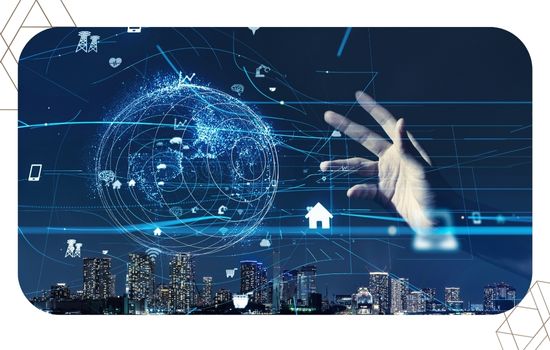
From the outset, it's important to make this clear: urban transformation based on data, technology, and digital governance is redefining how people live, work, and coexist in large cities.
In this article you will find a updated overviewWith a critical and human focus, this article explores what smart cities really are, how they work, their tangible benefits, the risks that need to be addressed, and why their development matters to anyone living in a city today.
Throughout the text, mobility, energy, public services, governance, social inclusion and sustainability are addressed, without falling into empty promises or exaggerated futurism.
What defines a smart city today?
A smart city is not measured solely by the number of sensors or digital screens installed.
Advertisements
The modern concept integrates technology, urban planning and citizen participation to improve the quality of life.
Open data platforms, connected mobility systems, efficient energy networks, and digital public services are part of the ecosystem, but the focus remains on the individual.
Unlike previous approaches, in 2025 the emphasis shifts towards intelligent management rather than simply digitization.
Technology functions as a means, not as an end.
When a city uses real-time data to reduce travel times, optimize water consumption, or anticipate failures in critical infrastructure, it approaches a mature version of Smart cities: the future of urban life.
Urban technology with a practical purpose
The advancement of the Internet of Things, artificial intelligence applied to public management, and cloud computing has allowed many cities to operate with greater precision.
Environmental sensors measure air quality, algorithms adjust traffic lights according to actual traffic, and digital platforms facilitate paperless and queuless procedures.
However, useful technology is that which solves specific problemsAutomating processes that nobody uses doesn't make a city smart.
In contrast, when a system reduces accidents, improves safety, or saves public resources, the impact becomes evident to the population.
Smart mobility: less friction, longer lifespan
One of the areas where progress is most noticeable is urban mobility.
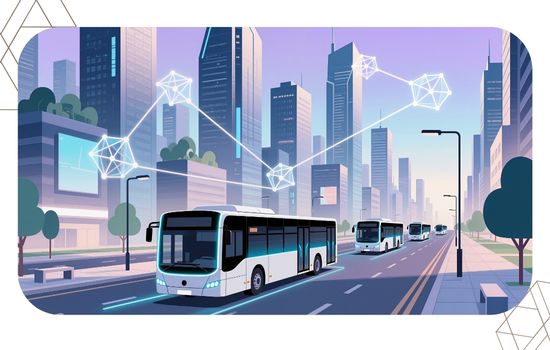
Connected transport systems allow for multimodal route planning, integration of bicycles, subways and buses, and adjustment of frequencies according to actual demand.
Example 1 (original): In a Latin American city with high congestion, the implementation of smart traffic lights connected to vehicle flow sensors reduced waiting times during peak hours without widening avenues or increasing maintenance costs.
The improvement came from using existing data strategically, not from building more infrastructure.
This type of solution demonstrates that Smart cities: the future of urban life It also involves making better use of what already exists.
Energy, water and resources: efficiency that makes a difference
Intelligent resource management has become a key pillar.
Smart grids balance demand, integrate renewable energy, and detect faults before blackouts occur.
Water monitoring systems help reduce leaks, a long-standing problem in many Latin American cities.
According to data from World Banknear the 25% of drinking water in Latin American cities is lost due to leaks in the distribution network, a fact widely cited in recent reports on urban infrastructure.
The application of monitoring and predictive maintenance technologies is already showing measurable reductions in several regional capitals.
Here, innovation not only saves public money; it also protects a vital resource that is becoming increasingly scarce.
Digital governance and citizen trust
A truly smart city requires capable and transparent institutions.
Open data platforms, digital participatory budgeting, and online citizen service systems strengthen the relationship between government and society.
Well-implemented digital governance improves decision-making and reduces opacity.
However, the use of big data also raises important ethical challenges: privacy, cybersecurity, and responsible use of personal information.
Addressing these issues clearly is key to maintaining public trust.
Social inclusion: the challenge that defines success
Talk about Smart cities: the future of urban life Without considering social inclusion, it would be incomplete.
The digital divide persists and, if not addressed, may widen.
Internet access, digital literacy, and accessible service design are essential conditions.
Example 2 (original): A city that digitized most of its procedures discovered that older adults had difficulty using the platforms.
The solution was not to eliminate the technology, but to complement it with hybrid care modules and community training, achieving greater adoption without excluding anyone.
Urban intelligence is also measured by its capacity to leave no one behind.
Analogy to understand the smart urban model
Thinking about a smart city is like conduct a symphony orchestraEach instrument – transport, energy, security, services – has its function.
Technology acts as the conductor who coordinates timing and harmony. Without coordination, noise dominates; with leadership and well-used data, a more efficient and livable urban melody emerges.
Real benefits for everyday life
The benefits are not limited to technical indicators.
Less time spent commuting means more personal time.
Streamlined public services reduce stress.
Better managed urban spaces increase safety and well-being.
Next, a Table with key areas and specific benefits:
| Urban area | Direct benefit for citizens |
|---|---|
| Mobility | Faster and more predictable transfers |
| Energy | Lower consumption and fewer blackouts |
| Water | Reduced leaks and improved quality |
| Public services | Simpler and more accessible procedures |
| Environment | Less urban pollution |
These results explain why Smart cities: the future of urban life has become a global strategic priority.

Read more: Renewable energy and technology: towards a greener future
Current challenges that cannot be ignored
Despite the progress, significant challenges remain.
The initial investment is usually high, interoperability between systems still presents problems, and training public staff takes time.
Furthermore, technological dependence demands robust cybersecurity plans.
Another critical point is to avoid imported solutions without local adaptation.
Each city has different social, economic, and cultural realities.
Urban intelligence must be built from the context, not copied like a mold.
Why does this model define the urban future?
Cities concentrate population, economic activity, and resource consumption.
Managing them in a traditional way is no longer sufficient.
In the face of urban growth and environmental pressure, integrating data, technology, and citizen participation becomes a necessity, not a fad.
The current discussion is not about whether cities should be smart, but How to achieve this in an ethical, sustainable, and people-centered way.
Conclusion: a more humane urban vision
Smart cities: the future of urban life It represents an opportunity to rethink how spaces where the majority of the population lives are designed and managed.
When technology is used with judgment, transparency and a social focus, the city ceases to be a chaotic system and becomes a fairer and more efficient environment.
The key question is not how many sensors a city has, but whether people live better because of them.
What good is a hyper-connected city if it doesn't improve the daily lives of its inhabitants?
Read more: 3D printing: how it's revolutionizing the industry
Frequently Asked Questions
Does a smart city depend solely on advanced technology?
No. Technology is a tool.
Urban planning, governance, and citizen participation are all equally important for the model to work.
Are smart cities only for developed countries?
Not necessarily. Many cities in emerging economies are leading innovative projects adapted to their local realities.
Are there risks to privacy?
Yes, that's why clear legal frameworks, transparency in data use, and robust cybersecurity systems are required.
Does the average citizen really benefit?
When the approach is right, the benefits are reflected in more agile services, less pollution, and a better quality of life.
This balanced, critical, and human approach allows us to understand why Smart cities: the future of urban life It is not just a technological trend, but a profound transformation of the urban experience in 2025 and beyond.