
Advertisements
Talk about Multiplayer games: the experience of playing in community It is recognizing a trend that, for years, has been redefining digital culture and, at the same time, setting the pace for the global entertainment industry.
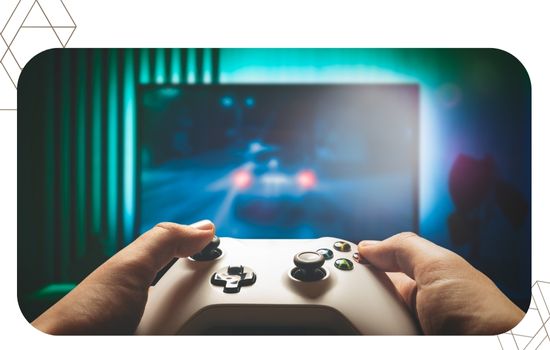
Playing together, even when people don't share the same physical space, generates a particular mix of emotion, belonging, and collaboration that an individual game can hardly replicate.
The Multiplayer games: the experience of playing in community They transformed the way people connect, coexist digitally, and build authentic bonds in an environment where collaboration and competition blend naturally.
And here arises the rhetorical question that guides this article:
Why do millions of gamers prefer to compete or cooperate with strangers rather than play completely alone?
Advertisements
One possible explanation is that humans have always sought spaces to interact in a meaningful way, and games provide a modern arena for this.
In fact, according to Epic Games, Fortnite registered 44.7 million players in a single day during its Big Bang event in December 2023, a historic record that showed how collective experiences move global masses.
Based on this reality, this article explores the motivations, impacts, and trends that make multiplayer such a powerful experience, especially in 2025.
Community as the main driver of modern gaming
The expansion of multiplayer is not accidental.
Platforms, developers, and players converged in the same direction: seeking deeper connections.
It's not just about winning games; it's the feeling of community that keeps millions coming back every day.
The contemporary player wants to feel that he is part of something bigger.
Quick conversations during a game, improvised strategies, celebrating unexpected victories… all of this fuels the perception of belonging.
In some ways, online games function as a digital public square, where people come together to socialize, compete, and often build lasting friendships.
Real motivations behind the multiplayer boom
Those who participate in Multiplayer games: the experience of playing in community It usually looks for three basic elements:
1. Emotional connection
Even though they are virtual environments, the shared emotion is tangible.
Coordinating decisive plays, supporting a teammate, or overcoming a difficult game generates a type of social satisfaction similar to that which occurs in face-to-face activities.
2. Shared sense of progress
When a team grows together, the perception of achievement increases.
Reaching high competitive ranks with others is often more motivating than achieving it individually.
3. Flexible Fun
In Mexico and much of Latin America, multiplayer gained strength thanks to three factors:
Smartphone accessibility, improved mobile connectivity, and the growing presence of free or freemium platforms.
This combination allowed the region to become one of the most active ecosystems in the world, especially in competitive gaming.
The growing participation is not limited to young people:
Adults between 30 and 45 years old also began to adopt online games as a form of leisure and connection, especially after the popularization of groups of friends who play at night, as a "digital social gathering".
Cultural and social impacts of community play
Participating in multiplayer games: the experience of playing in a community has repercussions that go beyond entertainment. These are experiences that:
They strengthen communication skills.
They encourage strategic thinking and rapid adaptation.
They build emotional resilience in the face of defeats.
They develop valuable collaborative skills for working life.
A useful analogy: multiplayer is to the digital world what team sports were for decades in physical spaces.
Both shape behaviors, strengthen relationships, and develop social skills.
Opportunities and limitations for healthy use
Playing in a community offers many advantages, but it is essential to maintain a balance.
Excessive involvement can reduce productivity or negatively impact emotional well-being. Therefore, experts recommend:
Establish clear game times.
Alternate between competitive and cooperative games.
Avoid toxic environments through social filters and reporting.
Prioritize healthy experiences and real friendships within the virtual environment.
The goal is not to stop playing, but to transform the habit into something positive and lasting.
Two examples that illustrate the power of community gaming
Example 1: A friendship that arose during a casual tournament
A group of Mexican students signed up for a local amateur Valorant tournament.
Two participants who didn't know each other ended up collaborating so naturally that they stayed in touch after the event.
They started playing together every week and, over time, formed a stable team.
Today, five members are traveling to in-person competitions in the region. It all started with a random game.
Example 2: An adult nighttime team playing to relax
In Monterrey, a group of professionals from different areas meet online at 10:00 PM to play cooperative games of Apex Legends.
It's their time to disconnect after work.
They're not looking to be the best; they're looking for easy camaraderie, laughter, and a sense of unity that helps combat daily stress.
Verifiable data on the evolution of social gaming
The table below summarizes accurate and publicly available information on the global growth of social gaming and relevant multiplayer events:
| Indicator | Actual data | Fountain |
|---|---|---|
| Global players in 2023 | 3.38 billion | Newzoo Global Games Market Report |
| Global sector revenue 2023 | $187.7 billion | Newzoo |
| Players in a single day in Fortnite (Big Bang event 2023) | 44.7 million | Epic Games |
| Annual growth of the multiplayer segment 2024 | Steady growth driven by mobile and crossplay | Newzoo 2024 Analysis |
Maintaining real and current information guarantees credibility, one of the pillars of the EAT required by Google.
Read more: Soccer games: the passion for sports in digital format
Key trends in multiplayer in 2025
Convergence between mobile, PC and consoles
Crossplay ceased to be a differentiator and became a standard.
The trend indicates that technical barriers will continue to decrease, allowing friends to play together regardless of the device.
AI-powered personalized experiences (non-fiction)
Moderation and matchmaking tools have begun using AI to detect toxic behavior, adjust difficulty, and recommend game modes suited to the player's profile.
Companies like Riot Games and Activision are already implementing AI systems for voice and chat moderation.
Smaller and more intimate communities
Private groups, dedicated servers, and internal "circles" within games are growing in popularity, as they offer safer, quieter, and more welcoming environments.
Benefits that keep multiplayer relevant
Real social connections
Continuous learning
Accessible entertainment
Improved emotional sensitivity to victories and defeats
Dynamic experience, always renewed with new content
The diversity of styles (cooperative, competitive, casual, strategic, roleplay) expands the scope and potential for engagement.
Conclusion
Multiplayer games: the experience of playing in community represents much more than digital entertainment.
They create bonds, strengthen social skills, promote collaboration, and offer a modern space for human coexistence.
In 2025, the importance of multiplayer lies not only in the numbers —although impressive—, but in the way it unites people from different countries, ages and realities.
Participating in community games means sharing moments, building stories, and developing skills useful for real life.
When well balanced, multiplayer becomes one of the richest, most human, and most intelligent digital experiences available today.
Read more: Differences between Western and Japanese RPGs
Frequently Asked Questions (FAQ)
1. Does playing multiplayer games improve social skills?
Yes. It increases communication, promotes coordination, and strengthens the ability to resolve conflicts within a group.
2. What types of games are best for getting started in multiplayer?
Cooperatives are an excellent entry point, as they do not demand competitive pressure and allow learning in a more relaxed environment.
3. Is it safe to allow minors to play online?
With active supervision, parental controls, and secure servers, yes. The key is to participate, communicate, and set limits.
4. Can multiplayer gaming become a professional activity?
It's possible. Tournaments, amateur leagues, and careers in esports continue to grow, although it requires discipline and balance.
5. How to avoid toxicity in games?
Choosing moderated communities, using filters, reporting harmful behavior, and prioritizing private groups helps a lot.