
Advertisements
Traveling to Patagonia is like opening a door to the extraordinary. It's entering a world where the wind blows fiercely, silence speaks louder than words, and every step reveals a masterpiece of nature.
In this article, you'll learn how to plan your trip, which routes are must-sees, how to find your way even without cell phone signal, and which apps to use to fully enjoy this magical experience without complications.
Patagonia stretches between southern Argentina and Chile and is one of the most dreamed-of destinations for those who love nature, adventure and tranquility.
But if you've never done a long hike or don't know where to start planning your trip, don't worry.
Here we explain everything step by step, with clear, friendly language and straight to the point.
Advertisements
By the end of this article you'll be ready to start your own expedition, even if it's your first time hiking.
And with the help of reliable apps like Komoot and Maps.meYou'll be able to follow routes, save important points, and move around safely even without an internet connection.
What makes Patagonia so special?
Patagonia is a vast, wild, and majestic region. It is characterized by having:
- Mountains with eternal snows
- Giant glaciers like the Perito Moreno
- Turquoise lakes
- Ancient and leafy forests
- Wide, clear skies like few others in the world
- Impressive wildlife: condors, guanacos, foxes, pumas, penguins
It doesn't matter if you like walking, taking photos, cycling, climbing, or simply contemplating.
Patagonia offers an unforgettable setting for all types of travelers.
It's a place that changes those who visit it. Its pure and overflowing beauty moves, inspires, and teaches.
Therefore, beyond being a tourist destination, it is a profound personal experience.
When to travel to Patagonia?
The best time to visit Patagonia is during the spring and summer of the southern hemisphere, between the months of November and March.
During this period:
- The days are longer, with daylight until 9pm
- The temperatures are pleasant, although it may still be cold
- There is a lower probability of heavy rain.
- The roads are open and in good condition
Traveling in autumn or winter also has its charm, especially for those looking to see snow, but many activities are limited and special equipment is needed.
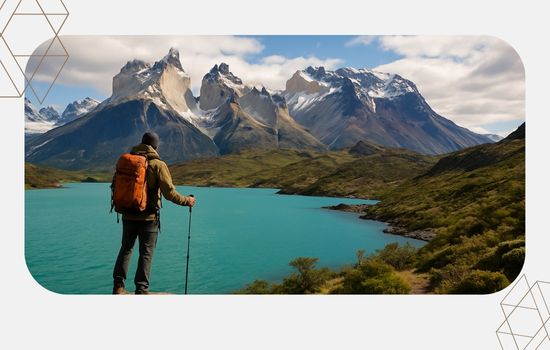
What clothes should I wear?
A common mistake beginners make is not dressing appropriately for the Patagonian weather.
Even in summer, it can get cold or rain suddenly.
That's why it's essential to wear layered clothing.
- Base layer: thermal or quick-drying t-shirt
- Mid-layer: fleece or lightweight jacket
- Outer layer: waterproof and windproof jacket
- Comfortable, durable and quick-drying trousers
- Waterproof hiking boots or shoes
- Hat, gloves and sunglasses
In addition, she always carries a small backpack with water, sunscreen, dried fruit or cereal bars, and a flashlight in case it gets dark.
Main places and routes to explore in Patagonia
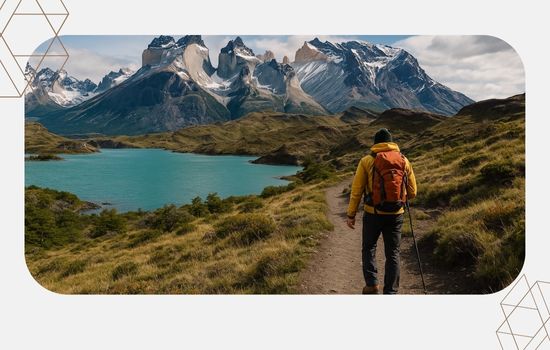
Torres del Paine National Park (Chile)
One of the most emblematic places in all of South America.
With routes of varying difficulty, you can take day hikes or multi-day treks, like the famous W Trek.
- Estimated time: 4 to 5 days for the W circuit
- Level: Intermediate
- Landscapes: mountains, lakes, glaciers and forests
Komoot It's an excellent option for planning this route. It allows you to see the altitude, distance, save points of interest, and follow the map even offline.
El Chaltén and Mount Fitz Roy (Argentina)
The paradise of Argentine trekking. From this small town start some of the most spectacular hikes in the country, such as the one that leads to Laguna de los Tres viewpoint, with a direct view of Fitz Roy.
- Distance: 20 km round trip
- Time: between 6 and 8 hours
- Difficulty: medium
- Reward: one of the most beautiful postcards of Patagonia
Maps.me It allows you to download maps and follow marked trails, which is ideal if you don't have internet access in the area.
Perito Moreno Glacier (El Calafate)
One of the few glaciers in the world that continues to advance. You can explore it on walkways or take a guided ice hike with crampons led by experts.
- Ideal for those who want a different experience without having to do prolonged trekking
- Direct view of ice breaks and frozen landscapes
- Easy access from the centre of El Calafate
Los Alerces National Park (Argentina)
Less well-known than other parks, but breathtakingly beautiful. Perfect for those seeking tranquility and unspoiled nature.
- Quiet trails, ideal for beginners
- Emerald lakes, ancient trees, and well-maintained campsites
- Very photogenic and less crowded
Plan your adventure step by step
1. Define the type of trip you want
Before packing your backpack, it's important to decide if you're going to:
- A short trip with half-day hikes
- A multi-day trek with camping
- Organized tours with a guide or on your own
Each option has its advantages and costs. If it's your first time, you can start with day trips.
2. Book your accommodation
Most tourist towns in Patagonia have:
- Affordable and comfortable hostels
- Campsites with bathrooms, electricity and grills
- Cabins and hotels with more comfort
During peak season (January and February), booking in advance is key. Especially in places like El Chaltén or Puerto Natales, which fill up quickly.
3. Prepare a functional backpack
A lightweight, well-organized backpack makes all the difference. Some essential items:
- Dry spare clothes in a plastic bag
- Reusable water bottle (minimum 1 liter)
- Dried fruit, nuts, energy bars
- Toilet paper, garbage bag
- Basic first aid kit
- Portable charger for cell phones
Read also:
It will stay in the same place!
4. Learn to read the Patagonian climate
The weather can change drastically in just a few hours. That's why:
- Check the forecast every morning.
- Avoid going out if there are wind or heavy rain warnings
- Always carry a waterproof jacket with you.
Apps that make your experience easier
Maps.me
Download Maps.me on Google Play
An essential app for exploring Patagonia without getting lost. Its advantages include:
- Detailed offline maps of routes and paths
- Ability to mark key points
- Offline GPS navigation
- Lightweight, fast and reliable
Komoot
Download Komoot on Google Play
Designed for hiking and cycling enthusiasts. It offers:
- Predefined routes by difficulty and duration
- Information on altitude and road conditions
- Reviews from other travelers and real photos
- Possibility to create your own custom route
Both apps are complementary. You can use them together to plan every step of your adventure.
Tips for trekking beginners
- Don't run, walk at your own pace
- Take a 5-minute break every 40 minutes.
- Stay hydrated, even if you're not thirsty
- Eat something light every 2 hours
- Take care of your knees on the descents, use walking sticks if you can
- If you see wild animals, observe them from a distance without making noise.
- Never leave the marked path
Food during your trip
Eating well is key to maintaining your energy. Some practical ideas:
- Breakfast: oatmeal with dried fruit and hot water
- Lunch: Sandwiches with whole wheat bread, cheese, tomato and tuna
- Dinner: instant soups, rice, easy-to-cook pasta
- Snacks: chocolate, peanuts, cereal bars
Many parks have campsites with fire pits or communal kitchens. Be sure to bring your pot, spoon, and lighter.
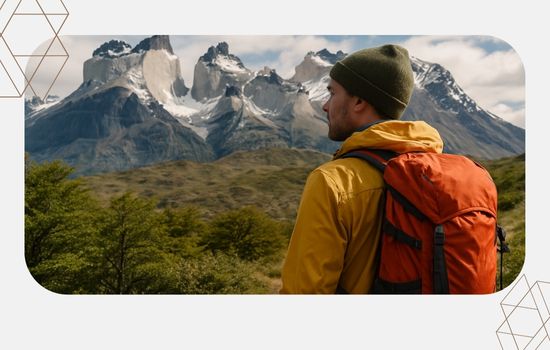
Take care of nature
Patagonia is one of the few places in the world where nature still reigns supreme. To protect it:
- Don't leave trash, take it with you to a bin.
- Do not feed animals
- Do not pick flowers or branches
- Use marked trails and respect the signs
- If you camp, avoid making fires in prohibited areas.
Caring for this environment is part of the experience. What you leave behind speaks volumes about you as a traveler.
Conclusion: Patagonia is waiting for you
Visiting Patagonia is not just a trip. It's a profound connection with nature and with yourself.
It's about learning to walk without rushing, to listen to the wind, to look at the sky without distractions. It's about reconnecting with what's essential.
And now, with all this information and two powerful apps on your phone, you can take the first step.
Whether you're a beginner or a seasoned adventurer, Patagonia has something special for you.
Download Maps.me and Komoot today and start planning your route. Your great adventure begins with a click. Patagonia awaits.