
Advertisements
Have you ever wondered how the apps we use every day were created?
Those apps that help us stay in touch with friends, pass the time, or even make our work easier have fascinating stories behind them.
In this article, we will explore the origins of the world's most famous apps, discover how they emerged, and analyze the impact they have had on society.
Get ready to discover curiosities you may never have imagined!
The creation of the first smartphone application
It all started in 2008, when Apple launched its App Store. Before that, mobile phones only had a limited number of programs, pre-installed by the manufacturers.
With the arrival of smartphones, the idea arose of allowing independent developers to create applications.
One of the first to stand out was Shazam, which identified songs with just a few seconds of audio.
Fascinating, isn't it? It showed the world that apps could go beyond the basics.
This moment marked the beginning of a revolution. Today, millions of apps are available in app stores, completely changing the way we connect with the world.
Who would have thought that something so simple would transform our daily routine?
Read also:
- Daily Airline Ticket Deals: Tips and Essential Sites
- Personalized Horoscope Apps
- Take care of your plants with smart apps
- Bring the GTA 5 experience to your mobile
- Optimize your cell phone's battery easily
Read on!
Who is behind the most important apps on the market?
Behind every famous app are talented and visionary teams.
Some began as small startups, while others were born within large corporations. Let's look at two iconic examples:
- WhatsAppCreated by Brian Acton and Jan Koum, two former Yahoo employees, WhatsApp was founded in 2009 with the idea of offering simple and direct communication. Interestingly, the creators almost abandoned the project at first due to a lack of users. Today, it belongs to Facebook and is used by billions of people.
- TikTokA more recent phenomenon, TikTok was developed by the Chinese company ByteDance in 2016. Originally called Douyin In China, it became world-famous when it was combined with the Musical.ly app in 2018. Its proposition of short and creative videos mainly won over young people, but today it is a success among people of all ages.
WhatsApp: from startup to global giant
Who could have imagined that such a simple idea as sending messages over the internet would become so essential?
WhatsApp was born out of the need to eliminate the costs of SMS and international calls. Interestingly, the founders were so discreet that they rejected the idea of including ads in the app.
That was before Facebook acquired it for the staggering sum of $19 billion in 2014.
Today, WhatsApp is more than just a messaging app. With features like video calls, digital payments, and work groups, it has become an indispensable tool in many countries.
TikTok: how it revolutionized digital entertainment
If there's one thing that defines TikTok, it's creativity. Have you ever wondered how videos of up to 60 seconds can be so addictive?
With easy-to-use editing tools and an algorithm that “guesses” what you like to see, the app has become an engagement machine.
Furthermore, it democratized access to content, allowing anyone, even without professional equipment, to reach millions of views.
TikTok also popularized trends, songs, and even new professions, such as content creators specializing in short videos.
The impact of social media applications on society
Social media apps have forever changed the way we connect with each other.
Before them, keeping in touch with distant friends was more complicated.
Today, all you have to do is open an app like Instagram or WhatsApp to chat or share moments.
However, it's not all perfect. Many experts debate the negative impacts, such as digital addiction and privacy challenges.
Nevertheless, it cannot be denied that these applications bring us closer to those who are far away and create new possibilities for work and expression.

Interesting facts about the behind-the-scenes of app development
- WhatsAppThe initial idea was a status app, where users could let their friends know what they were doing. The messaging feature came later.
- InstagramBefore it was called Instagram, the app was known as Burbn It was initially focused on check-ins and photos. Only after simplifying it to filters and images did it become extremely popular.
- TikTokThe application's algorithm is so advanced that it can accurately predict what you would like to see, based on just a few seconds of interaction.
The future of apps: what to expect?
With artificial intelligence and augmented reality on the rise, the future of apps promises to be even more interactive.
Imagine apps that can understand your emotions, anticipate your needs, or create completely immersive experiences.
It sounds like something out of a science fiction movie, but it's closer than we think.
Furthermore, device integration will continue to increase. It won't be surprising if, in the near future, our cars and household appliances operate in complete synchronization with our phone apps.
The best apps:
- Popular in more than 180 countries.
- Practical features such as video calls and groups.
- Simple and intuitive interface.
TikTok
- Perfect for those looking for quick and creative entertainment.
- One of the most downloaded apps in the world.
- A social network that combines images, videos, and interactivity.
- Ideal for businesses, content creators, and photography enthusiasts.
What do users think?
- WhatsApp"I can't live without it. It's practical and always works well."
- TikTok"I love how funny it is. I always end up laughing at the videos."
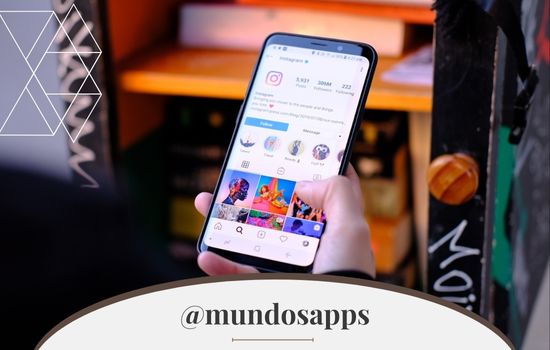
- Instagram"It's perfect for keeping up with the latest news and sharing moments."
Conclusion
The world's most popular apps didn't get where they are by chance. They were created to solve problems, connect people, and entertain them.
Their stories remind us that the best ideas often come from simplicity.
Now that you know the inner workings of these giants, how about exploring their features even further?
Share this article with your friends and make the most of the power of apps!
Download links:
FAQs about the world's most popular apps
1. What was the first smartphone app?
The first notable smartphone app was ShazamLaunched in 2008 with the arrival of Apple's App Store. Although phones already had pre-installed programs, Shazam It stood out by allowing users to identify songs with just a few seconds of audio. This launch marked the beginning of the mobile app revolution.
2. What makes an application successful?
The success of an app hinges on solving real-world problems or meeting specific user needs. Furthermore, a user-friendly interface, consistent updates, and excellent customer service are essential. Apps like WhatsApp and TikTok triumphed because they simplified communication and entertainment in innovative and accessible ways.
3. How are free apps funded?
Most free apps are funded through advertising. Some also offer in-app purchases or premium versions with exclusive features. For example, TikTok generates revenue through targeted ads and brand collaborations. WhatsApp, while ad-free, is part of the Facebook ecosystem, which uses data for its monetization strategies.
4. What is the story behind WhatsApp?
WhatsApp was founded in 2009 by Brian Acton and Jan Koum, former Yahoo employees. Initially, their idea was a status app to let contacts know what a user was doing. However, seeing the potential of instant messaging, they changed their approach. Its simplicity and lack of advertising made it a global success, and in 2014 it was acquired by Facebook for $19 billion.
5. What makes TikTok special?
TikTok stands out for its highly sophisticated algorithm that adapts content to user interests in a matter of seconds. Furthermore, its ease of use for creating and editing short videos allows anyone to express themselves and go viral, without needing prior experience in video production. This has made it popular across all generations.
6. How have apps changed our lives?
Apps have transformed the way we communicate, work, learn, and entertain ourselves. Social networks like Instagram have revolutionized how we share moments and build communities. Meanwhile, tools like WhatsApp have facilitated global communication at no extra cost. However, they have also raised new challenges, such as time management and privacy.
7. What can we expect from the future of apps?
The future of apps will be shaped by artificial intelligence and augmented reality. Apps will be able to interpret emotions, offer immersive experiences, and sync with smart devices such as appliances and vehicles. Furthermore, there will be a greater focus on digital sustainability, seeking to reduce the environmental impact of technology use.
8. How secure are popular apps?
An app's security depends on the data protection offered by its developer. WhatsApp, for example, uses end-to-end encryption to protect message privacy. However, it's recommended to read each app's privacy policy and avoid sharing sensitive information on untrusted platforms.