Advertisements
Most promising innovations in solar and wind energy They are setting the pace of the global energy transition today.
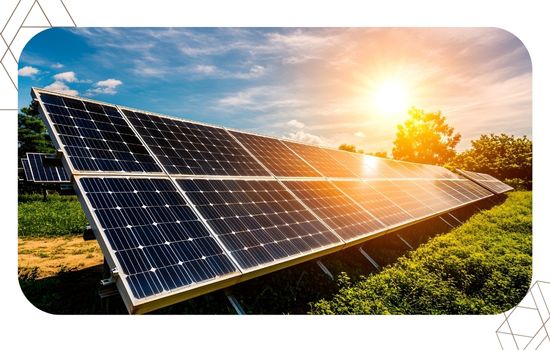
The combination of scientific advances, precision engineering, and digitalization is redefining how clean electricity is generated on a large scale and how it is reliably integrated into electrical systems.
In 2025, the conversation will no longer revolve solely around installing more panels or wind turbines, but about making them more efficient, durable, and adaptable to real-world contexts.
Summary of this article:
- What innovations are transforming solar energy
- How technology is revolutionizing wind energy
- The role of digitization and advanced materials
- A key statistic and a clear analogy
- Current challenges and answers to frequently asked questions
If technology has already changed the way you communicate and work, why shouldn't it also transform the way energy is produced?
Advertisements
A new cycle of energy innovation
During the last decade, solar and wind energy have gone from being complementary alternatives to pillars of the electricity system in many countries.
That change didn't happen by chance. Behind it lies a chain of innovations that reduced costs, increased efficiency, and improved reliability.
The Most promising innovations in solar and wind energy They focus on three fronts: materials, systems design, and intelligent management.
Each one provides measurable improvements that allow more energy to be produced with fewer resources and less environmental impact.
This comprehensive approach explains why adoption continues to accelerate even in markets with high energy demand.
Key advances in solar energy: beyond traditional silicon
Photovoltaic technology is undergoing a period of profound refinement.
Although silicon still dominates the market, new configurations boost its performance without driving up costs.
Bifacial solar cells, for example, capture radiation from both sides of the panel, taking advantage of the light reflected off the ground.
This design increases energy production under real-world conditions, especially in large-scale plants.
At the same time, anti-reflective coatings and improvements in the internal architecture of the cells reduce heat losses and increase the lifespan of the modules, a key factor for long-term profitability.
Perovskites and tandem cells: evolving efficiency
One of the developments most observed by the industry is the use of perovskites in combination with silicon.
So-called tandem cells take advantage of different ranges of the solar spectrum, achieving efficiencies superior to conventional technologies.
Although its commercial rollout is still gradual, advances in stability and industrial-scale manufacturing position this technology as one of the Most promising innovations in solar and wind energy, with a direct impact on reducing the cost per kilowatt generated.
The research is progressing with a clear focus: high efficiency, replicable processes, and less resource-intensive materials.
Wind energy: smarter and more adaptable turbines
In the wind energy sector, innovation is focused on aerodynamic design and digitalization. Today's turbines are not only taller; they are also more precise.
Longer, lighter blades capture wind at lower speeds, extending the operating range.
In addition, integrated sensors allow the blade angle to be adjusted in real time, optimizing power generation according to specific environmental conditions.
This adaptive capability improves performance and reduces mechanical wear.
Wind energy is no longer solely dependent on available wind and is now managed with technological intelligence.
Digitization and data analysis in wind farms
Digital management has become a strategic differentiator. Predictive analytics platforms identify micro-variations in climate and anticipate maintenance needs before critical failures occur.
A first concrete example can be seen in offshore wind farms in northern Europe, where continuous monitoring systems reduced downtime and operating costs without the need to increase the installed infrastructure.
The result was greater production with the same assets.
This integration between hardware and software explains why wind power continues to gain ground even in regions with complex conditions.
A key piece of data that confirms the trend
The magnitude of the progress is reflected in official figures.
According to the International Energy Agency (IEA), in 2023 global renewable capacity grew by nearly 500 gigawatts, powered primarily by solar and wind energy.
This is the largest annual increase recorded so far.
This data not only confirms market interest, but also validates the technological maturity achieved by these sources.
Storage and stability: the indispensable complement
Efficient generation loses value without stability. That's why many of the Most promising innovations in solar and wind energy They are linked to energy storage and grid integration.
Denser batteries, hybrid systems, and digital control allow for the storage of surplus energy and its release when demand requires it.
The electrical system becomes more flexible and less dependent on fossil fuel backup sources.
A simple analogy is helpful here: renewable energy without storage is like a bountiful harvest without silos; it produces a lot, but not always when it is needed.
Advanced materials and real sustainability
Innovation is not limited to energy efficiency. The development of recyclable materials and cleaner manufacturing processes reduces the environmental footprint from the very beginning.
In wind energy, new resins facilitate the recycling of blades at the end of their useful life. In solar energy, the use of aluminum and glass is being optimized to reduce emissions associated with production.
This approach strengthens the credibility of the sector and responds to increasingly strict regulatory requirements.
Decentralization and new consumption models
Technology is also driving a change in the way energy is consumed.
Distributed solar systems, combined with digital management, allow homes and businesses to produce some of their own electricity.
A second example can be seen in industrial areas of Mexico, where solar installations with intelligent monitoring reduce peak demand and optimize operating costs without compromising the continuity of supply.
Generation ceases to be a distant process and becomes integrated into everyday decision-making.
Table: Main innovations and their impact
| Technology | Main application | Key benefit |
|---|---|---|
| Bifacial solar cells | Large-scale solar power plants | Increased production |
| Tandem cells (perovskite) | Advanced photovoltaic systems | High efficiency |
| Large diameter wind turbines | Terrestrial and marine parks | Capture in low wind |
| Digital predictive analytics | Operation and maintenance | Fewer failures |
Read more: Cybersecurity in 2025: Main digital threats
Current technical and regulatory challenges
Despite the progress, full adoption faces challenges.
Modernizing electrical networks, training specialized talent, and adapting regulatory frameworks require investment and coordination.
Cybersecurity is emerging as a central issue, as more digitized systems require robust protection.
However, these challenges do not halt progress; they define the next level of maturity for the sector.
Conclusion: Innovation as a strategic advantage
The Most promising innovations in solar and wind energy they no longer belong to an experimental scenario.
They are part of the energy present and offer clear competitive advantages: lower cost, greater efficiency and verifiable sustainability.
Those who understand this evolution not only participate in the energy transition, but also position themselves better in a market that values efficiency, technology and environmental responsibility.
The energy future is being built today, with informed decisions and intelligently applied technology.
Read more: Renewable energy and technology: towards a greener future
Frequently Asked Questions
Are solar and wind energy reliable for large cities?
With smart grids, storage, and digital management, both sources offer high operational reliability.
Do these innovations make energy more expensive?
In most cases, technology reduces costs in the medium term thanks to greater efficiency and less maintenance.
Which innovation will have the greatest impact in the coming years?
The combination of advanced storage and digitization will make a difference in stability and scalability.
Is offshore wind energy really viable?
Yes, especially in regions with consistent winds and mature technological platforms.
How can a company take advantage of these innovations?
Integrating renewable generation, digital monitoring, and energy efficiency strategies aligned with your operation.